
Insurance and Public Support for SEN Families in Hong Kong 香港特殊教育需要(SEN)家庭的保險與公共支援
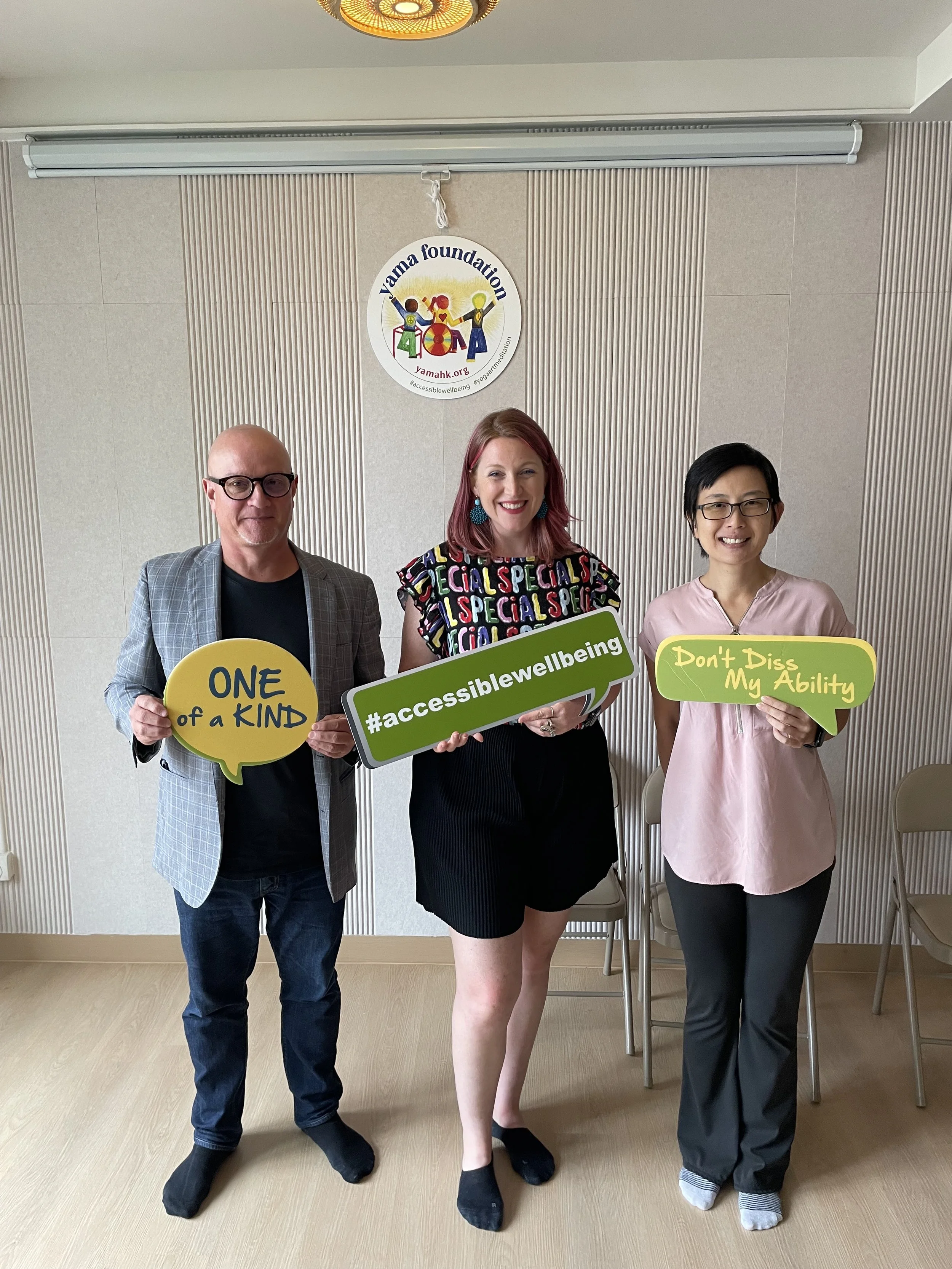
Last Saturday, families, advocates, and professionals came together for a panel discussion many parents in Hong Kong had been waiting for. Titled "Unlocking Support: A Guide to the Health Insurance and Public Welfare System," the session focused on children with disabilities and special educational needs (SEN) as part of our Accessible Wellbeing Community Series.
For many parents, the journey starts with a diagnosis and quickly turns into a maze of paperwork and confusing eligibility rules. It's exhausting. And too often, families give up on support they're fully entitled to receive.
That's exactly why this conversation mattered. Moderated by Cruzanne Macalligan, Co-Vice Chair of CDC HK and RTHK host, the panel brought together two experts with decades of combined experience. Damien Green, Founder of the Hong Kong Autism Institute and lead of its Family Advocacy Initiative, tackled the world of health insurance. Sarah Tam then broke down the public support landscape, drawing on her years as an advocate for families of people with severe intellectual disabilities, her role as former Vice-chairperson of Special Needs Network Hong Kong, and her work as an Executive Committee member of the Association of Family Carers of Severely Intellectually Disabled Persons.
This recap pulls together the key insights from both speakers, along with the audience Q&A.
The Biggest Misconceptions Families Have About Support
Cruzanne opened the panel with a simple question: what do families get wrong most often?
The answers from both speakers pointed to the same root problem—families assume the systems are working against them, so they don't even try.
On the insurance side, Damien noted that many parents believe a diagnosis automatically makes their child "uninsurable." That's rarely true. On the public side, Sarah highlighted a different misconception: that public support is a form of charity reserved for the desperate. In reality, these are entitlements funded by taxpayers, designed for exactly these situations.
Both speakers agreed that misinformation—not the systems themselves—is often the biggest barrier. Families hear horror stories from other parents and assume the worst before they've even asked the right questions.
Part One: Health Insurance with Damien Green
Damien Green has spent years working inside and alongside the insurance industry. His message was blunt but hopeful: the system is flawed, but it's more navigable than most families think.
Why the insurance industry struggles with risk
According to Damien, one of the core issues is a poor understanding of risk within the insurance industry itself. Many frontline staff and even underwriters lack the training to properly assess conditions related to disability and SEN. When faced with an unfamiliar diagnosis, the default response is often rejection—not because the risk is genuinely uninsurable, but because it's easier to say no.
Organisational complacency and the pressure to close cases
Damien also pointed to a cultural problem inside insurance companies. Staff face pressure to close cases quickly. A complex application involving a child with autism or a developmental delay takes time and effort to assess properly. Under deadline pressure, complacency wins, and families receive a fast "no" instead of a more in-depth and nuanced review.
Good risk versus bad risk
A key concept Damien introduced was the difference between "good risk" and "bad risk." Not every condition carries the same level of financial risk for an insurer. Many conditions associated with SEN are stable, predictable, and manageable—which actually makes them insurable. The problem is that insurers don't always take the time to distinguish good risk from bad. Families who understand this distinction can push back on unfair rejections.
Why diagnosis is the essential first step
Damien was clear on one point: a proper diagnosis is the foundation of everything. Without a formal diagnosis, insurers have no data to assess, and families have no basis to make claims or apply for public support. A diagnosis isn't just a medical milestone—it's a practical tool that unlocks doors across both systems.
What's insurable—and what to do when something isn't
Not everything can be insured. Pre-existing conditions, in particular, are frequently excluded. But Damien encouraged families not to treat exclusions as the end of the road. If a specific condition can't be covered, other aspects of a child's health often still can. The goal is to secure whatever coverage is available, rather than walking away with nothing because full coverage isn't possible.
The importance of full disclosure
One of Damien's strongest warnings was about disclosure. Some families, fearing rejection, leave out details or downplay a condition on their applications. This is a serious mistake. Non-disclosure gives insurers grounds to void a policy later—often at the exact moment a family needs to claim. Honesty upfront protects the policy's validity down the line.
Life insurance for parents of SEN children
Damien also raised a point many families overlook: life insurance for parents. For a child with lifelong support needs, the question of "what happens when I'm gone?" is deeply real. Adequate life insurance for parents can form part of a long-term financial safety net, ensuring care can continue regardless of what the future holds.
Damien's practical tips
Damien offered two concrete pieces of advice. First, be cautious with licensed insurance intermediaries. Not all licensed insurance intermediaries understand SEN-related conditions, and some may steer families toward products that don't serve them well. Ask questions, and don't be afraid to seek a second opinion. Second, he highlighted his own work training institutions through the Hong Kong Autism Institute — part of a broader effort to improve how the industry handles these cases from the inside. Damien’s organisation (HKAI) is also always available to sit down with parents and caregivers to get a sense of their options.
Part Two: Public Support with Sarah Tam
Where Damien focused on the private sector, Sarah Tam turned to Hong Kong's public support systems. Her decades of advocacy have given her a detailed map of what's available—and what families routinely miss.
Key public systems for children aged 0–6 and 6–18
Sarah broke the public support landscape into age brackets. For children aged 0–6, the focus is on early intervention—pre-school rehabilitation services and assessment through government channels. For children aged 6–18, the emphasis shifts toward school-based support and services that align with a child's educational journey.
Understanding which stage your child is in helps you target the right services rather than chasing everything at once.
Where to start without becoming overwhelmed
Sarah's advice for overwhelmed parents was refreshingly practical: don't try to do everything at once. Start with a diagnosis and assessment, then focus on the single most pressing need. The systems are large, and trying to tackle every application simultaneously leads to burnout. One step at a time is not just easier—it's more effective.
Underused and lesser-known schemes
Sarah spent time on support that many families never discover. She highlighted the Disability Allowance, which provides direct financial assistance to those who qualify. She also pointed to transport subsidies that can ease the daily cost of getting children to therapy and school.
One point stood out: certain schemes are open to non-permanent resident children. Many families assume public support is off-limits unless they hold permanent residency, and as a result they never apply. Sarah urged families to check eligibility carefully rather than assuming they're excluded.
Planning for the transition to adulthood
Sarah stressed that support doesn't end at 18—but it does change dramatically. Parents of teenagers should begin planning early for the transition to adult services, which operate under different rules and often have long waiting lists. Thinking ahead about day care, residential options, and ongoing support can prevent a painful gap when a child ages out of youth services.
How the Two Systems Work Together
One of the most valuable parts of the panel came when Cruzanne asked how insurance and public support fit together.
The takeaway: they're complementary, not competing. Public support provides a baseline of services and financial assistance available to all who qualify. Private insurance can then fill gaps—covering treatments, therapies, or medical costs that public services don't fully address.
A diagnosis sits at the centre of both. It's the document that unlocks insurance assessments and public scheme eligibility alike. Families who secure a solid diagnosis early give themselves the strongest possible footing in both systems.
Used together, the two systems can provide far more coverage than either alone. The mistake is treating them as an either/or choice.
What Needs to Change
Both speakers were candid about the flaws in the current landscape.
Damien called for better training within the insurance industry so that risk is assessed fairly rather than dismissed out of convenience. He wants to see a culture shift—one where a complex application is treated as a case to be understood, not a problem to be closed.
Sarah pushed for clearer communication from public bodies. Too many families miss out simply because information is scattered, hard to find, or buried in jargon. She also called for more support during the transition to adulthood, an area she described as consistently under-resourced.
Both agreed that families shouldn't have to become experts just to access what they're entitled to. The burden should sit with the systems, not the parents.
The Key Takeaway: You Have a Right to Support
If there was one message the panel wanted families to leave with, it was this: there is no shame in using public support.
Public assistance isn't charity. It isn't a last resort for those who've failed to cope. It's a right—funded and designed for families raising children with disabilities and SEN. Claiming it doesn't reflect weakness; it reflects good sense.
The same goes for insurance. Families deserve fair treatment, honest advice, and coverage that reflects the real level of risk. When the systems fall short, the answer isn't to give up—it's to ask better questions, seek out advocates, and keep pushing.
For parents just beginning this journey, the next step is simple: pursue a proper diagnosis, then explore both systems side by side. Reach out to advocacy groups like the Hong Kong Autism Institute's Family Advocacy Initiative for guidance. You don't have to navigate it alone.
Frequently Asked Questions
Can a child with autism or a disability get health insurance in Hong Kong?
Yes, in many cases. A diagnosis does not automatically make a child uninsurable. Many SEN-related conditions are stable and predictable, which makes them insurable. Some conditions may be excluded, but partial coverage is often still available.
Is a formal diagnosis really necessary?
Yes. A proper diagnosis is the foundation for both insurance and public support. Insurers need it to assess risk, and public schemes require it to determine eligibility. Securing a diagnosis early strengthens your position in both systems.
Do I have to disclose my child's condition when applying for insurance?
Absolutely. Full disclosure is essential. Leaving out details may feel safer in the short term, but it gives insurers grounds to void the policy later—often when you most need to claim.
Can non-permanent resident children access public support in Hong Kong?
In some cases, yes. Certain schemes are open to non-permanent resident children. Many families wrongly assume they're excluded and never apply. Always check eligibility carefully rather than assuming you don't qualify.
What public schemes are commonly overlooked?
Sarah Tam highlighted the Disability Allowance and transport subsidies as frequently underused. Both provide meaningful financial relief, yet many families don't know they exist or assume they won't qualify.
What happens to support when my child turns 18?
Support continues but changes significantly. Adult services operate under different rules and often carry long waiting lists. Parents should begin planning for this transition well before their child turns 18 to avoid gaps in care.
*************************************************************************************************
上星期六,一羣家長、倡議者及專業人士,齊聚一堂參與一場許多香港家長期待已久的座談會。這場題為「解鎖支援:醫療保險及公共福利制度指南」的講座,是我們「無障礙身心健康社羣系列」的一部分,聚焦於有殘疾及特殊教育需要(SEN)的兒童。
對許多家長來說,這段旅程由一紙診斷開始,卻很快演變成一堆文件及複雜資格規則交織而成的迷宮。這過程令人筋疲力盡。而太多家庭,最終放棄了他們本應完全有資格獲得的支援。
這正是這場對談如此重要的原因。座談會由 Cruzanne Macalligan 主持,她是 明德兒童啓育中心(CDC)的聯席副主席,亦是香港電台(RTHK)節目主持人。座談會匯聚了兩位擁有數十年綜合經驗的專家:Damien Green,Hong Kong Autism Institute 的創辦人,並領導其 Family Advocacy Initiative,負責探討醫療保險的世界;Sarah Tam 則剖析公共支援的全貌,她多年來一直為嚴重智障人士的家庭發聲,曾任香港特殊需要網絡副主席,並現為 嚴重智障人士家長協會有限公司 的執行委員會成員。
這篇回顧文章,整合了兩位講者的重要見解,以及觀眾提問環節的內容。
家庭對支援制度最常見的誤解
Cruzanne 以一條簡單的問題揭開座談會序幕:家庭最常搞錯的是甚麼?
兩位講者的答案,都指向同一個根本問題:家庭往往假設制度是與他們對立的,因此連嘗試都不願意。
在保險方面,Damien 指出,許多家長誤以為,一旦子女獲得診斷,便自動「無法投保」。這個想法在現實中鮮少成立。而在公共支援方面,Sarah 則指出另一個誤解:認為公共支援是一種只留給走投無路者的施捨。事實上,這些是由納稅人資助的權利,正正是為這類情況而設計的。
兩位講者均認同,錯誤資訊,而非制度本身,往往才是最大的障礙。家庭聽到其他家長分享的可怕經歷,於是在還未問對問題之前,就已經預設了最壞的結果。
第一部分:Damien Green談醫療保險
Damien Green 多年來一直在保險業界內部及周邊工作。他的訊息坦白卻不失希望:制度確有缺陷,但比大部分家庭想像中更容易應付。
為何保險業界在風險評估上感到吃力
根據 Damien 所言,核心問題之一,在於保險業界本身對風險的理解不足。許多前線員工,甚至核保人員,都缺乏適當評估與殘疾及SEN相關狀況的培訓。面對不熟悉的診斷,最常見的默認反應就是拒絕,並非因為風險真的無法承保,而是因為說「不」更容易。
機構的因循心態,以及盡快結案的壓力
Damien 亦指出保險公司內部存在的一種文化問題。員工承受著要盡快結案的壓力。一份涉及自閉症或發展遲緩兒童的複雜申請,需要時間及心力才能妥善評估。在死線的壓力下,因循心態往往佔了上風,家庭因而得到的是一個快速的「不」,而非更深入、更細緻的審核。
「好風險」與「壞風險」
Damien 提出的一個重要概念,是「好風險」與「壞風險」之間的分別。並非每種狀況,對保險公司而言都帶有同等的財務風險。許多與SEN相關的狀況,其實穩定、可預測、可管理,這正正令它們變得可承保。問題在於,保險公司並非總會花時間,去區分好風險與壞風險。理解這個分別的家庭,便能夠對不公平的拒絕作出反駁。
為何診斷是不可或缺的第一步
Damien 在這一點上十分明確:一份正式的診斷,是一切的基礎。沒有正式診斷,保險公司便沒有數據可供評估,家庭亦沒有基礎去申請索償或公共支援。診斷不僅是一個醫學上的里程碑,它更是一項實用的工具,能同時打開兩個制度的大門。
甚麼可以投保,當某項狀況不能投保時該怎麼辦
並非所有狀況都能投保。既有病症(pre-existing conditions),尤其經常被排除在保障範圍之外。但Damien鼓勵家庭,不要將被拒保視為終點。如果某項特定狀況無法承保,孩子健康的其他方面往往仍然可以。目標,是盡量爭取現有可得的保障,而非因為無法獲得全面保障,就甚麼都不爭取。
全面披露的重要性
Damien 其中一項最強烈的提醒,是關於披露事宜。有些家庭,因為擔心被拒保,而在申請時遺漏細節或淡化病況。這是一個嚴重的錯誤。未有全面披露,會令保險公司有理據,在日後(往往正正是家庭最需要索償的一刻)令保單失效。事前誠實披露,能保障保單日後的有效性。
SEN子女家長的人壽保險
Damien 亦提出一點,是許多家庭容易忽略的:家長自身的人壽保險。對於一名需要終身支援的孩子而言,「當我不在的時候,會怎樣?」這個問題,是非常真實的。家長投保足夠的人壽保險,可以成為長遠財務安全網的一部分,確保無論未來如何,照顧都能持續下去。
Damien 的實用建議
Damien 提供了兩項具體建議。第一,對持牌保險中介人要保持審慎。並非所有持牌保險中介人都了解與SEN相關的狀況,有些甚至可能引導家庭選擇並不真正適合他們的產品。多加提問,並不要害怕尋求第二方意見。第二,他特別提到自己透過 Hong Kong Autism Institute 為業界機構提供培訓的工作,這是一項更廣泛的努力,旨在從業界內部改善處理這類個案的方式。Damien 所屬機構(HKAI)亦一直歡迎與家長及照顧者會面,了解他們可行的選項。
第二部分:Sarah Tam 談公共支援
在 Damien 聚焦私營界別之後,Sarah Tam 則轉向香港的公共支援制度。她數十年來的倡議經驗,讓她對現有支援有著詳盡的了解,以及家庭經常錯過的部分。
0至6歲及6至18歲兒童的主要公共制度
Sarah 將公共支援制度,按年齡層劃分講解。對於0至6歲的兒童,重點在於及早介入,即透過政府渠道提供的學前康復服務及評估。對於6至18歲的兒童,重點則轉移至以學校為本的支援,以及配合孩子學習歷程的相關服務。
了解孩子現處於哪個階段,有助家長針對合適的服務,而非同時追趕所有事情。
在不感到不知所措的情況下,該從何入手
Sarah 給予感到不知所措的家長的建議,出乎意料地實用:不要嘗試一次過做完所有事情。先由診斷及評估開始,然後聚焦於最迫切的單一需要。這些制度規模龐大,若嘗試同時處理每一項申請,容易導致心力交瘁。一步一步來,不僅較為輕鬆,亦更為有效。
鮮為人知、未被充分利用的支援計劃
Sarah 花了不少時間,講解許多家庭從未發現的支援。她特別提到傷殘津貼,為合資格人士提供直接的經濟援助。她亦提到交通津貼,能減輕接送孩子往返治療及學校的日常開支。
其中一點特別值得留意:某些計劃,對非永久性居民的兒童同樣開放。許多家庭誤以為,若非持有永久性居民身份,便無法申請公共支援,因而從未提出申請。Sarah 促請各家庭仔細查核資格,而非假設自己不合資格。
為踏入成年階段作好準備
Sarah 強調,支援並不會在18歲時終止,但確會出現重大變化。青少年的家長,應及早開始為過渡至成人服務作好準備,因為這些服務運作於不同的規則之下,且往往設有頗長的輪候名單。及早思考日間照顧、住宿選項及持續支援等安排,可避免孩子踏出青少年服務範圍時,出現令人痛苦的空隙。
兩個制度如何互相配合
座談會其中一個最有價值的部分,是 Cruzanne 提出保險與公共支援如何互相配合這條問題時。
重點在於:兩者是互補,而非互相競爭的關係。公共支援,為所有符合資格人士,提供一系列基本服務及經濟援助。私人保險,則能填補當中的缺口,涵蓋公共服務未能完全照顧到的治療、療程或醫療開支。
診斷,是兩者的核心。它是同時打開保險評估及公共計劃資格的文件。及早取得穩健診斷的家庭,能在兩個制度中,為自己建立最有利的基礎。
當兩個制度一併運用時,所能提供的保障,遠比單靠其中一個更為全面。真正的錯誤,是將兩者視為非此即彼的選擇。
有待改變之處
兩位講者都對現行制度的缺陷,坦誠相見。
Damien 呼籲保險業界加強培訓,令風險評估更公平,而非因為方便而輕易否決。他期望見到一種文化上的轉變:讓一份複雜的申請,被視為一個需要被理解的個案,而非一個需要盡快結束的問題。
Sarah 則爭取公共機構提供更清晰的資訊。太多家庭僅僅因為資訊分散、難以尋找,或被艱澀的術語掩蓋,而錯過了應有的支援。她亦呼籲在過渡至成人階段方面,提供更多支援,她形容這是一個一直資源不足的範疇。
兩位講者都認同,家庭不應該為了獲得他們應得的支援,而被迫成為專家。這個負擔,應該由制度承擔,而非由家長承擔。
重點:您擁有獲得支援的權利
如果座談會希望家庭帶走一個訊息,那就是:使用公共支援,並不可恥。
公共援助並非施捨。它不是留給那些「應付不來」的人的最後選擇。它是一項權利,由稅款資助,並專為養育有殘疾及SEN子女的家庭而設計。申請這項支援,並不代表軟弱;它代表的是明智的判斷。
保險亦然。家庭應得到公平的對待、誠實的建議,以及切合真實風險水平的保障。當制度未能盡如人意時,答案並非放棄,而是提出更好的問題、尋求倡議者的協助,並繼續爭取。
對於剛開始這段旅程的家長,下一步很簡單:先取得正式診斷,然後同時探索兩個制度。可聯絡 Hong Kong Autism Institute 的 Family Advocacy Initiative 等倡議團體,尋求指引。您毋須獨自面對這一切。
常見問題
在香港,患有自閉症或殘疾的兒童能否投保醫療保險?
可以,在許多情況下是可行的。診斷本身,並不會自動令孩子「無法投保」。許多與SEN相關的狀況,其實穩定且可預測,這正正令它們可以投保。部分狀況或會被排除,但通常仍能取得部分保障。
正式診斷真的有必要嗎?
是的。一份正式診斷,是保險及公共支援兩方面的基礎。保險公司需要它來評估風險,公共計劃亦需要它來確定資格。及早取得診斷,能鞏固您在兩個制度中的位置。
申請保險時,我是否需要披露孩子的狀況?
絕對需要。全面披露是不可或缺的。短期內遺漏細節或許感覺較「安全」,但這會讓保險公司有理據,在日後(往往正正是您最需要索償的時候)令保單失效。
非永久性居民的兒童,能否在香港獲得公共支援?
在某些情況下,是可以的。部分計劃,對非永久性居民的兒童同樣開放。許多家庭錯誤地假設自己被排除在外,因而從未提出申請。務必仔細查核資格,而非假設自己不合資格。
哪些公共計劃經常被忽略?
Sarah Tam特別提到,傷殘津貼及交通津貼是經常未被充分利用的支援。兩者均能提供實質的經濟援助,然而許多家庭並不知道它們的存在,或誤以為自己不合資格。
當孩子踏入18歲後,支援會有甚麼變化?
支援會持續,但將出現重大變化。成人服務運作於不同的規則之下,且往往設有較長的輪候名單。家長應在孩子踏入18歲之前,及早開始為這個過渡階段作好準備,以避免照顧上出現空隙。